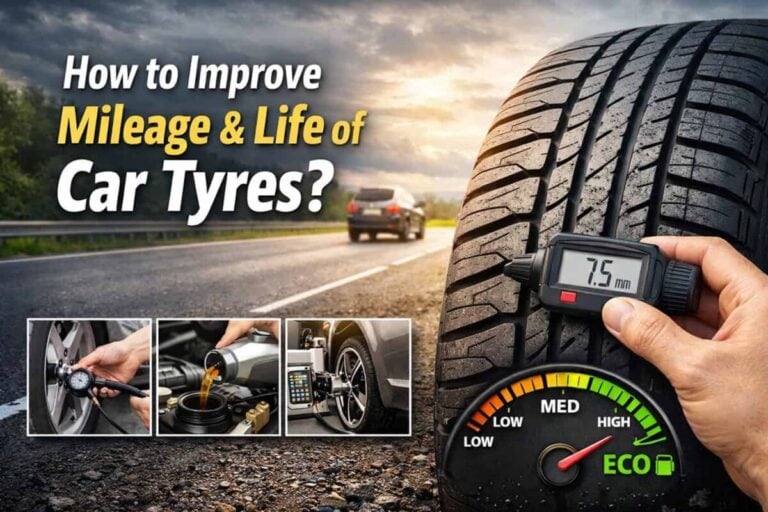
To extend the life of your car tyres and improve mileage, focus on a combination of maintenance, driving habits, and smart choices. Here’s a comprehensive guide tailored for both longevity and fuel efficiency:
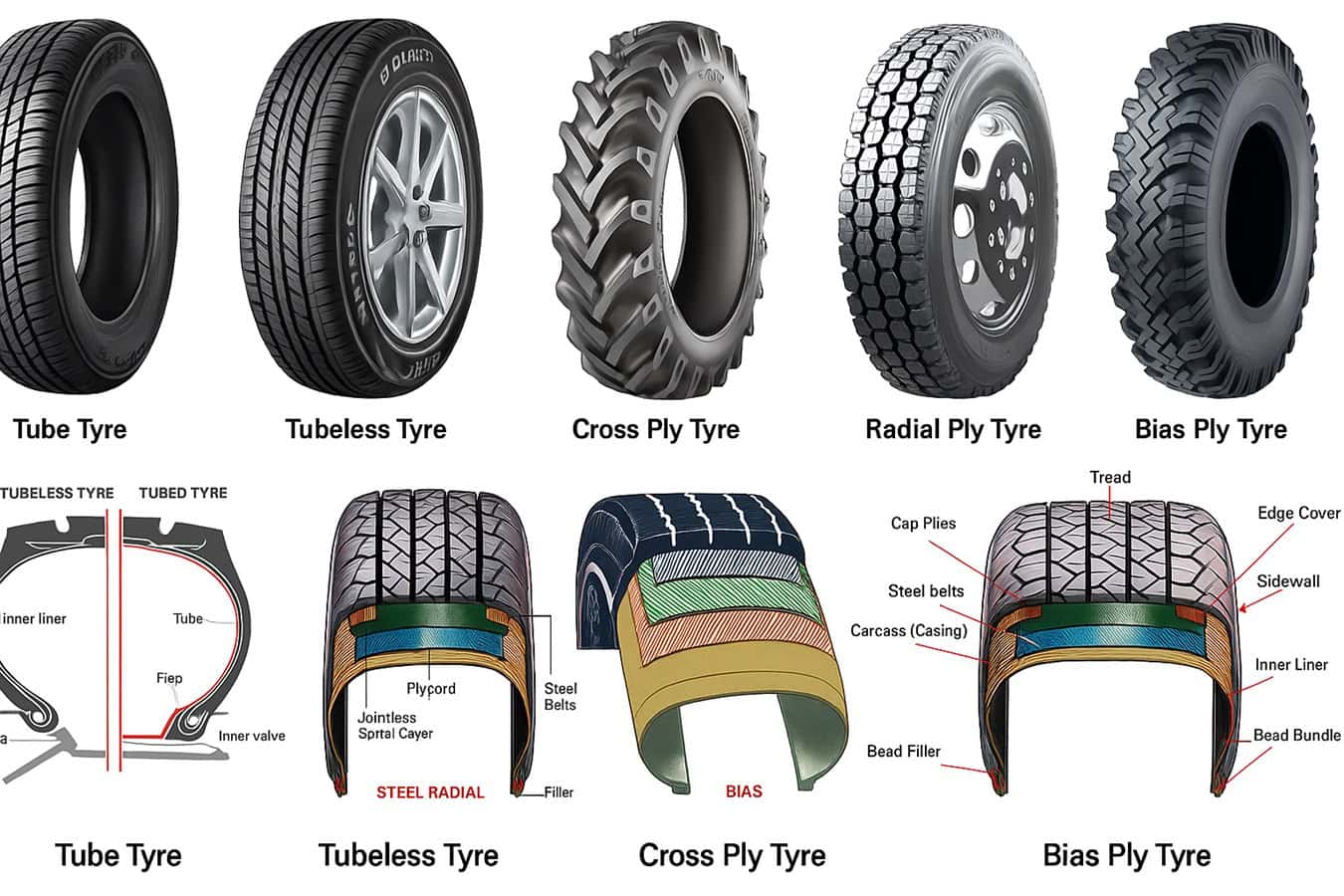
Your tyres are more than just rubber on the road. They are key safety parts that affect your car’s performance. With the right care, they can last 3-5 years or more, keeping you safe.
🛠️ Tyre Maintenance Tips
- Maintain Proper Tyre Pressure. Check monthly and before long trips. Underinflated tyres increase rolling resistance, reducing mileage and causing them to wear out faster.
- Rotate Tyres Regularly Every 8,000–10,000 km helps distribute wear evenly across all tyres.
- Wheel Alignment & Balancing Misalignment causes uneven wear and poor fuel economy. Get it checked every 6 months or if you notice pulling or vibration.
- Inspect Tread Depth: Replace tyres when tread depth drops below 1.6 mm. Shallow treads reduce grip and increase fuel consumption.
- Avoid Overloading. Excess weight strains tyres and the engine, reducing both tyre life and mileage.
🚗 Driving Habits That Extend Tire Life
Driving habits affect both tyre life and fuel efficiency. Adopting these practices will maximise your investment.
Smooth acceleration and braking techniques
Slow acceleration and gentle braking reduce tyre wear and fuel use. Aggressive driving can cut tyre life in half and increase fuel use.
Anticipate traffic to keep steady speeds. This reduces unnecessary braking and acceleration, saving fuel and tyre wear.
Proper load distribution practices
Even tyre weight distribution ensures balanced wear and optimal performance. Overloading specific areas creates uneven pressure, increasing rolling resistance.
Check your car’s maximum load capacity and avoid exceeding it. Heavy loads increase rolling resistance and significantly reduce fuel efficiency.
| Tire Maintenance Factor | Potential Fuel Savings | Recommended Frequency | Key Benefits |
| Proper Inflation | Up to 3% | Monthly check | Even wear, better handling |
| Wheel Alignment | Up to 10% | Annual or after impact | Straighter tracking, longer tyre life |
| Tyre Rotation | 2-3% | Every 5,000-7,000 miles | Even wear pattern, consistent performance |
| Nitrogen Inflation | 1-2% | With new tyres or refills | Stable pressure, reduced oxidation |
Nitrogen inflation keeps tyre pressure stable over time. This consistency improves fuel economy and extends tyre life.
By choosing smart tyres, properly maintaining them, and driving wisely, you can greatly improve your car’s fuel efficiency and performance. This will help your tyres last longer.
Maintaining Optimal Tire Pressure
Correct tyre pressure is simple but effective for better mileage and safety. Under-inflated tyres make your engine work harder, using more fuel. Studies show keeping the right pressure can save up to 3% on fuel costs. Air pressure changes with temperature, so monthly checks are a must.
How to Check Your Tire Pressure Correctly
Here’s how to get accurate readings:
- Check tyres when they’re cold (driven less than 1 mile)
- Use a reliable digital or dial pressure gauge
- Remove the valve cap and press the gauge firmly onto the valve stem
- Read the measurement and compare it to the recommended PSI
- Add air if needed and recheck pressure
🔧 Smart Choices for Long-Term Gains
- Choose Low Rolling Resistance Tyres. These are designed to improve mileage without compromising safety.
- Use Nitrogen Instead of Air. Nitrogen maintains pressure longer and reduces internal tyre oxidation.
- Park in Shade or indoors. UV rays and heat degrade rubber over time.
📊 Bonus: Mileage vs Tyre Type
| Tyre Type | Expected Life (km) | Mileage Efficiency |
|---|---|---|
| Touring Tyres | 60,000–80,000 | High |
| Performance Tyres | 30,000–50,000 | Moderate |
| Low Rolling Resistance | 50,000–70,000 | Very High |